
5-Week Wealth Builder Challenge: Week 4
Learn the three risk mistakes that quietly drain beginner portfolios, and how to avoid them for good.


Hey friend,
Welcome to Week four of the 5-Week Wealth Builder Challenge!
In weeks 1-3, you learned to:
Build an investing plan that fits your life and goals
Use buying signals (like moving averages) to buy stocks at better prices
Follow a buying checklist so you can invest with confidence instead of anxiety.
And now that you know how and when to buy, it’s time to learn a skill that protects everything you’ve built: managing risk.
Why Most Beginners Actually Lose Money
Did you know, 70% to 90% of beginner investors lose money, and poor risk management is always listed as a primary reason?
Yeah, that stat blew my mind, too. In other words, far too many beginners learn how to buy a stock without learning how to protect the money they’ve spent buying it.
This week, you’re going to fix that.
Here are 3 areas of risk you should manage:
1️⃣ Overexposure: Investing Too Much in One Stock or Industry
Few things can shake your confidence faster than putting too much money into one stock and watching it all tank.
Let’s use Nvidia as an example:
Between January and April 2025, the world’s largest company had a stock decline of nearly 40%.
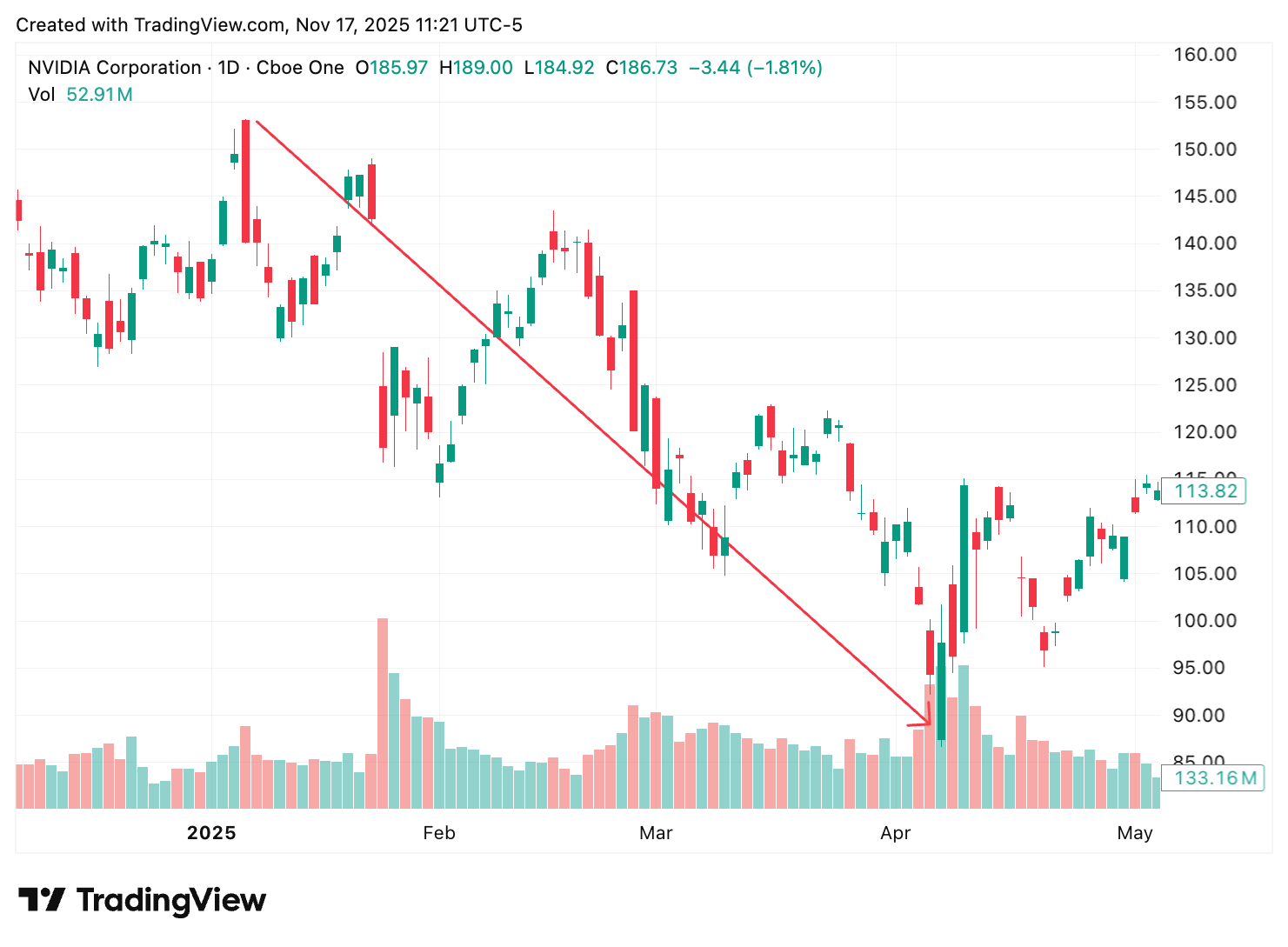
If your plan was to invest only in this company, it meant a 40% decrease in your portfolio’s value. That can trigger emotional pain, investor’s remorse, and insecurity.
In other words, you might feel threatened and unsafe. And when that sets in, you’re far more likely to fall into the next risk: making emotional decisions.
2️⃣ Emotional Decisions: The Silent Wealth Killer
Having an abundance of money can make you feel free and less stressed. On the other hand, financial troubles have a way of making you feel trapped, painfully stressed, and as heavy as a boulder. If you aren’t careful, these emotions can convince you to sell too early, buy too late, and abandon your entire plan the moment you get too uncomfortable.
But this is why you spent three weeks building a system. When you follow it, everything shifts:
Your plan replaces the fear you feel when stock prices get uncomfortably low.
Your buying signals replace FOMO, so you don’t buy at sky-high prices.
And your checklist keeps you focused on logic, not emotion.
💡 Pro tip: Anytime you react to the market based on how you feel, you’re probably making a mistake. Just take a step back, examine your emotions, put them in their rightful places, then revisit your system.
3️⃣ Using Money You Actually Need
Never invest money you actually need. Ever!
When your rent, mortgage, or bill money is in the market, every movement that’s not in your favor will cause anxiety. It’s nearly impossible to think long-term. You will not be patient, and you’re likely to always make emotional decisions.
But on the other hand, when you invest money you won’t need for years to come, everything changes:
You stop checking prices, obsessively
You let your plan work without interference
You stop reacting to FOMO, and every headline you read
Your Action Step This Week
Write these three reminders somewhere you can see them every day, and internalize them so you don’t make these mistakes while growing as an investor:
As a beginner:
No single investment deserves more than 10–15% of your portfolio
Only invest money you won’t need for years to come
And follow your system, not your emotions
In Thursday’s Newsletter
Later this week, in Earn Out Loud PRO, you’ll take these same risk foundations and apply them to trading. You’ll learn:
How to size positions
How much money to risk per trade
How to stay safe when the market moves fast
The exact formulas I use every week
As a trader, your goal is to generate income. These risk management principles will help you keep that income consistent.
Until then,
Isaiah from Earn Out Loud
PS—Enjoyed this article? Tap the restack button at the bottom of the page. It will be shared with others who might enjoy it, too. Thanks for your support.